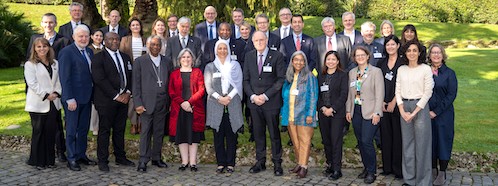
On 13 March 2026, scientists, policymakers and practitioners working in the conservation and use of crop diversity met at the headquarters of the Pontifical Academy of Sciences, Casina Pio IV, to consider how emerging advances in science and technology are reshaping the field. Building on prior initiatives of the Pontifical Academy relating to agrifood systems and nature conservation,[1] the workshop addressed how genomics, artificial intelligence, synthetic biology and other emerging technologies can strengthen the productivity, sustainability and equity of the global food system.
Genebanks are essential to protecting and making available the crop diversity that we inherited from generations of farming communities. This heritage is under threat. As Pope Francis emphasized in Laudato Si’, “The earth’s resources are also being plundered because of short-sighted approaches to the economy, commerce and production. The loss of forests and woodlands entails the loss of species which may constitute extremely important resources in the future, not only for food but also for curing disease and other uses. Different species contain genes which could be key resources in years ahead for meeting human needs and regulating environmental problems. … It is not enough, however, to think of different species merely as potential “resources” to be exploited, while overlooking the fact that they have value in themselves.”
There are some 900 genebanks in the world, including the international genebanks managed by the Consultative Group for International Agricultural Research (CGIAR) centers. The Global Seed Vault in Svalbard, near the North Pole, serves as their safety back-up. These genebanks are guardians of resources that require protection for eternity. The International Treaty on Plant Genetic Resources for Food and Agriculture provides the institutional framework for access and benefit sharing.
Participants considered two central questions:
- How will emerging technologies transform
...
Read all
On 13 March 2026, scientists, policymakers and practitioners working in the conservation and use of crop diversity met at the headquarters of the Pontifical Academy of Sciences, Casina Pio IV, to consider how emerging advances in science and technology are reshaping the field. Building on prior initiatives of the Pontifical Academy relating to agrifood systems and nature conservation,[1] the workshop addressed how genomics, artificial intelligence, synthetic biology and other emerging technologies can strengthen the productivity, sustainability and equity of the global food system.
Genebanks are essential to protecting and making available the crop diversity that we inherited from generations of farming communities. This heritage is under threat. As Pope Francis emphasized in Laudato Si’, “The earth’s resources are also being plundered because of short-sighted approaches to the economy, commerce and production. The loss of forests and woodlands entails the loss of species which may constitute extremely important resources in the future, not only for food but also for curing disease and other uses. Different species contain genes which could be key resources in years ahead for meeting human needs and regulating environmental problems. … It is not enough, however, to think of different species merely as potential “resources” to be exploited, while overlooking the fact that they have value in themselves.”
There are some 900 genebanks in the world, including the international genebanks managed by the Consultative Group for International Agricultural Research (CGIAR) centers. The Global Seed Vault in Svalbard, near the North Pole, serves as their safety back-up. These genebanks are guardians of resources that require protection for eternity. The International Treaty on Plant Genetic Resources for Food and Agriculture provides the institutional framework for access and benefit sharing.
Participants considered two central questions:
- How will emerging technologies transform the operations and use of collections of crop diversity?
- What policies, investments, capacities and institutional arrangements are required to ensure that these transformations benefit all countries and stakeholders?
Leveraging scientific and technological advances
Presentations and discussions highlighted that advanced genomics, combined with artificial intelligence, promise to accelerate plant breeding and to facilitate the strategic deployment of crop diversity in response to climate change, pests, and diseases while contributing to the goal of affordable and healthy diets for all. Genome-based phenotypic prediction and high-throughput DNA sequencing, for instance, increasingly enable more systematic identification of valuable traits. Artificial intelligence tools can guide breeding and agronomic trials, while enhancing integrative modelling and simulations for climate adaptation, nutrition, and livelihood outcomes.
Continuing breakthroughs in synthetic biology may provide opportunities to expand applications in industrial biotechnology and biomedicines. The convergence of biological and digital innovations is increasing both the scientific and the economic value of crop diversity, while blurring traditional boundaries between food, health, and industry in a sustainable bioeconomy context.
These scientific advances present expanding opportunities for genebanks and other biological collections. They can evolve into bio-digital hubs that enable improved management of collections and identification of useful diversity, offering farmers and other users highly curated, data-rich plant materials. The integration of digital sequence information with agronomic, phenotypic, geospatial and ecological data can substantially increase the utility and impact of conserved diversity.
Fostering equity and inclusion
However, accelerating innovation is not a meaningful goal in itself. The real objective is to facilitate more sustainable and resilient food systems serving the health and well-being of people and the planet, and this cannot occur without crop diversity.
Unfortunately, the opportunities arising from innovations are unevenly distributed across countries, farming communities, and beneficiaries. Genebanks differ widely in their financial, technical, and human capacities. Without investment and enabling policies, many genebanks – particularly in low- and middle-income countries – risk being left behind. Their collections could remain under-characterized, underutilized, and increasingly marginalized in a data-driven bio-digital future.
The application of new and advanced science and technologies should serve to reinforce, not undermine, international cooperation in the conservation and sustainable use of crop diversity. The separation of genetic sequence information from physical seeds, along with the possible concentration of genomic data in private domains, could weaken the Multilateral System established by the Plant Treaty to facilitate open exchange and equitable benefit-sharing. Governance frameworks will need to adapt to enable open innovation models. Emerging benefit-sharing mechanisms for digital sequence information, including the Cali Fund,[2] should contribute directly to strengthening conservation infrastructure and long-term financing, including capacity building for genebanks.
Looking ahead
Making genebanks fit for the future requires attention and coordinated action across a set of interlinked ethical, technical and financial domains:
- The conservation and use of crop diversity in the bio-digital age is not solely a technical matter. It is also a question of stewardship, justice, and equity. The rights and knowledge of farmers and indigenous communities, the primary guardians of the world’s crop diversity, must be recognized and protected.
- Substantial investment in conservation, characterization, and access for use are urgently needed.
- Funds must be mobilized to strengthen the genomic and bioinformatics capabilities of genebanks and their partners, along with data platforms that integrate diverse forms of data.
- Governance and management systems and institutions must ensure clear mandates, operational efficiencies, harmonized standards, and equitable access and benefit-sharing for knowledge, data and biological materials.
The relevance of this agenda is echoed once more in Pope Francis’ Encyclical Laudato Si’, “The urgent challenge to protect our common home includes a concern to bring the whole human family together to seek a sustainable and integral development, for we know that things can change.” Guided by inclusive policies, sustainable financing models, and international solidarity, advances in science and technology can significantly strengthen the global architecture for conserving and deploying crop diversity for the benefit of present and future generations.
[1] For example: Resilience of People and Ecosystems under Climate Stress, 2024; Science and Innovations for a Sustainable Food System, 2021; Reduction of Food Loss and Waste, 2019; Science and Actions for Species Protection – Noah’s Arks for the 21st Century, 2019.
[2] For further information, see https://www.cbd.int/califund.
Read Less